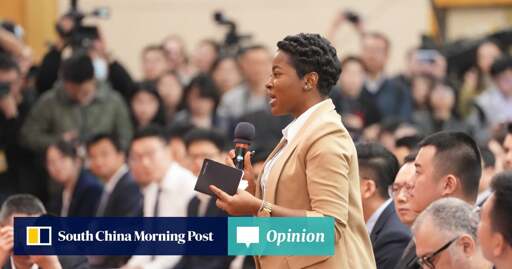
The annual “two sessions” in Beijing, a crucial window into China’s policy priorities and economic trajectory, continue to draw significant Western media scrutiny. However, a subtle yet perceptible shift appears to be under way – a tempering of harsh criticism alongside a sustained analytical focus.
My colleagues and I conducted a content analysis of major Western news outlets, tracking the frequency of keywords related to China’s economy, technology and environment between 2019 and 2025; keywords were categorised as positive, negative or neutral.
We analysed 10 major British and American news outlets – including CNN, BBC News and The New York Times. Among those outlets, nearly 70 per cent of stories covering China’s economy, technology or environment in 2019 had a negative tone, according to our research. However, by 2025, the share of negative stories dropped to around 40 per cent, along with an increase in neutral coverage across all categories and positive coverage of the economy.
This suggests a move away from a predominantly negative framing of China in Western media towards a more complex and multifaceted representation. This shift also suggests a growing recognition of China’s achievements and its role in the global economy. Several factors might explain why Western newsrooms are acknowledging these efforts.
The scale and demonstrable results of China’s economic policies are undeniable. In 2024, final consumption contributed 44.5 per cent to China’s economic growth, surpassing exports and investment. Domestically, electric vehicle sales surged by roughly 40 per cent in 2024 compared to the year before. The commitment to issuing special treasury bonds to support initiatives like trade-in programmes shows a clear dedication to boosting consumer spending.
The changing geopolitical landscape – particularly the US-China trade tensions and the global focus on climate change – has forced Western media to reassess China’s role. For some in the West dealing with their own economic challenges, the relative stability of China’s economy might look increasingly more appealing.
China’s advancements in key technological sectors, such as artificial intelligence (AI) and renewable energy, are creating significant competitive pressure. Chinese companies making strides in open-source large language models or telecommunications like DeepSeek and Huawei are forcing Western nations to acknowledge China’s capabilities.
The number of new 5G base stations – reportedly exceeding 4.19 million by the end of last year – reinforces China’s technological advancement. In advanced manufacturing, China’s progress in robotics and automation is transforming industries and impacting global supply chains. Driven by significant investment in research and development, these advancements make China a major competitor to the US and Europe, forcing a reassessment of existing industrial strategies.
China’s dominance in solar panel production – accounting for around 80 per cent of global manufacturing capacity, according to the International Energy Agency – highlights its leadership in renewable energy overall and its potential to shape global energy transitions.
Perhaps most significantly, China’s growing emphasis on green development resonates with Western audiences increasingly concerned about climate change. With ambitious targets for renewable energy deployment, substantial investments in EVs and increasingly stringent efforts to reduce greenhouse gas emissions, China is attracting attention from environmentalists, policymakers and industry stakeholders.
Furthermore, China is a dominant force in the worldwide EV and hybrid industries, with domestic purchases accounting for over three-quarters of global sales in February, according to data compiled by the China Association of Automobile Manufacturers.
While scepticism about the overall environmental record persists, particularly regarding coal consumption, the sheer scale of China’s green initiatives cannot be ignored. Data on China’s significant contributions to global renewable energy capacity is not only frequently cited but also analysed to understand the implications for global climate action.
In today’s global economic landscape, marked by uncertainties and fluctuations, China’s economic policy stands out for its stability and consistency. Unlike the US, where policy shifts can abruptly occur due to political changes and short-term economic pressures – exemplified by the imposition of unilateral tariffs that disrupt global supply chains and create trade tensions – China’s long-term strategic planning and consistent policy implementation have yielded results.
The facts speak for themselves. China’s sustained economic growth, technological advancements and commitment to green development, as evidenced by concrete data points, show the effectiveness of its approach. This stability not only fosters a predictable environment for businesses but also strengthens China’s position as a reliable economic partner on the world stage, in stark contrast to the volatility generated by certain US trade policies.
The shifting sands of scrutiny surrounding China’s two sessions reflect a complex interplay of factors. China’s evolving economic strategy, its technological prowess and its commitment to green development are contributing to a more nuanced portrayal. It is also crucial to consider the influence of internal Chinese media, which plays a significant role in shaping both domestic and international perceptions.
Online discourse and social media also have a significant effect on the public’s perception, often amplifying positive and negative narratives alike. Western media outlets must strive for balanced reporting by at least acknowledging China’s achievements. Only through a nuanced approach, grounded in data and critical analysis, can the West foster a constructive and mutually beneficial relationship with China in the 21st century.
As China continues to navigate its complex economic and political landscape, the West must remain vigilant but also be open to dialogue and cooperation. This evolving understanding, marked by both cautious optimism and critical scrutiny, could pave the way for a more productive relationship.


Full text
The annual “two sessions” in Beijing, a crucial window into China’s policy priorities and economic trajectory, continue to draw significant Western media scrutiny. However, a subtle yet perceptible shift appears to be under way – a tempering of harsh criticism alongside a sustained analytical focus.
My colleagues and I conducted a content analysis of major Western news outlets, tracking the frequency of keywords related to China’s economy, technology and environment between 2019 and 2025; keywords were categorised as positive, negative or neutral.
We analysed 10 major British and American news outlets – including CNN, BBC News and The New York Times. Among those outlets, nearly 70 per cent of stories covering China’s economy, technology or environment in 2019 had a negative tone, according to our research. However, by 2025, the share of negative stories dropped to around 40 per cent, along with an increase in neutral coverage across all categories and positive coverage of the economy.
This suggests a move away from a predominantly negative framing of China in Western media towards a more complex and multifaceted representation. This shift also suggests a growing recognition of China’s achievements and its role in the global economy. Several factors might explain why Western newsrooms are acknowledging these efforts.
The scale and demonstrable results of China’s economic policies are undeniable. In 2024, final consumption contributed 44.5 per cent to China’s economic growth, surpassing exports and investment. Domestically, electric vehicle sales surged by roughly 40 per cent in 2024 compared to the year before. The commitment to issuing special treasury bonds to support initiatives like trade-in programmes shows a clear dedication to boosting consumer spending.
The changing geopolitical landscape – particularly the US-China trade tensions and the global focus on climate change – has forced Western media to reassess China’s role. For some in the West dealing with their own economic challenges, the relative stability of China’s economy might look increasingly more appealing.
China’s advancements in key technological sectors, such as artificial intelligence (AI) and renewable energy, are creating significant competitive pressure. Chinese companies making strides in open-source large language models or telecommunications like DeepSeek and Huawei are forcing Western nations to acknowledge China’s capabilities.
The number of new 5G base stations – reportedly exceeding 4.19 million by the end of last year – reinforces China’s technological advancement. In advanced manufacturing, China’s progress in robotics and automation is transforming industries and impacting global supply chains. Driven by significant investment in research and development, these advancements make China a major competitor to the US and Europe, forcing a reassessment of existing industrial strategies.
China’s dominance in solar panel production – accounting for around 80 per cent of global manufacturing capacity, according to the International Energy Agency – highlights its leadership in renewable energy overall and its potential to shape global energy transitions.
Perhaps most significantly, China’s growing emphasis on green development resonates with Western audiences increasingly concerned about climate change. With ambitious targets for renewable energy deployment, substantial investments in EVs and increasingly stringent efforts to reduce greenhouse gas emissions, China is attracting attention from environmentalists, policymakers and industry stakeholders.
Furthermore, China is a dominant force in the worldwide EV and hybrid industries, with domestic purchases accounting for over three-quarters of global sales in February, according to data compiled by the China Association of Automobile Manufacturers.
While scepticism about the overall environmental record persists, particularly regarding coal consumption, the sheer scale of China’s green initiatives cannot be ignored. Data on China’s significant contributions to global renewable energy capacity is not only frequently cited but also analysed to understand the implications for global climate action.
In today’s global economic landscape, marked by uncertainties and fluctuations, China’s economic policy stands out for its stability and consistency. Unlike the US, where policy shifts can abruptly occur due to political changes and short-term economic pressures – exemplified by the imposition of unilateral tariffs that disrupt global supply chains and create trade tensions – China’s long-term strategic planning and consistent policy implementation have yielded results.
The facts speak for themselves. China’s sustained economic growth, technological advancements and commitment to green development, as evidenced by concrete data points, show the effectiveness of its approach. This stability not only fosters a predictable environment for businesses but also strengthens China’s position as a reliable economic partner on the world stage, in stark contrast to the volatility generated by certain US trade policies.
The shifting sands of scrutiny surrounding China’s two sessions reflect a complex interplay of factors. China’s evolving economic strategy, its technological prowess and its commitment to green development are contributing to a more nuanced portrayal. It is also crucial to consider the influence of internal Chinese media, which plays a significant role in shaping both domestic and international perceptions.
Online discourse and social media also have a significant effect on the public’s perception, often amplifying positive and negative narratives alike. Western media outlets must strive for balanced reporting by at least acknowledging China’s achievements. Only through a nuanced approach, grounded in data and critical analysis, can the West foster a constructive and mutually beneficial relationship with China in the 21st century.
As China continues to navigate its complex economic and political landscape, the West must remain vigilant but also be open to dialogue and cooperation. This evolving understanding, marked by both cautious optimism and critical scrutiny, could pave the way for a more productive relationship.