

Five
Admin at Slrpnk.net
Pronouns: they/he
The Five Filters of the Propaganda Model
Admins PM me for access to Fedi Admin Guild Loomio
- 104 Posts
- 29 Comments



I think wider discussion of micro-bureaucracies would be valuable. During the November meta, a member requested some kind of vote on our descision to defederate nazi instances, which I think was adequately discussed and concluded. It stood out to me that the member objected to my description of voting in this manner as ‘bureaucratic’ – a word I felt I was using descriptively, but was interpreted as pejorative. I think it’s interesting that different people have different definitions of bureaucracy.
What is bureaucracy?
 9·7 months ago
I’m glad you said something. I don’t mind so much when pieces that are critical of solarpunk or a corruption of the aesthetic are occasionally posted here because it gives the community an opportunity to define itself against those representations. I tend to skip over them myself though. I think introspection and criticism are core to the Solarpunk ideal, and I’m glad this essay was a fresh carafe of that tea.


I was looking at the vfairs.com site, where they host content from 2024 and 2023. I guess they started using their own domain exclusively. I expected them to update the vfairs site for 2025.
I think it’s not immediately obvious what Donut Economics is about. It is a category of degrowth, and !degrowth is a fairly active community. Posting about DE there will help spread the word.
It’s strange they haven’t announced for 2025. Did they lose their funding?
 61·8 months ago
The Party of Donald Trump wrote the emancipation proclamation in the 1800s. Who cares?
 3·8 months ago
Mulberry pie, delicious.
If God really existed, it would be necessary to abolish him.
– Mikhail Bakunin

Fascists read mein kampf like christians read the bible – not at all if they can help it. I don’t think his words had the influence or significance you’re honoring them with.
This seems to be the implicit message of all cults and religions, many of which pre-date Hitler by thousands of years. Where did he write this message?
The worst thing Hitler did, long term, the thing he did the most civilizational damage with, was a sentence in a book about how/why one should read books. It’s done more than 8m bodies of damage since.
Help me out, I’m not getting this reference.



No, but I will acknowledge it is insane and idiotic for me to spend time educating people who use Billy Madison memes to accuse others of lowing the quality of discourse.
How was the meaning of this word altered so dramatically in the United States? During the First World War, some of the leading Progressive writers began to use the word liberalism as a substitute for progressivism, which had become tarnished by its association with their fallen hero, Theodore Roosevelt, who had run and lost on a Progressive third party ticket. Traditional liberals were not happy to see their label transformed. In the 1920s, The New York Times criticized "the expropriation of the time-honored word ‘liberal’ " and argued that “the Radical-Red school of thought … hand back the word ‘liberal’ to its original owners.” During the early 1930s, Herbert Hoover and Franklin Roosevelt duked it out as to who was the true liberal. Roosevelt won, adopting the term to ward off accusations of being left-wing. He could declare that liberalism was “plain English for a changed concept of the duty and responsibility of government toward economic life.” And since the New Deal, liberalism in the United States has been identified with an expansion of government’s role in the economy.
– Daniel Yergin, The Commanding Heights
The use of the term ‘liberals’ by the Intercept is not meant to be synonymous with ‘the left’ – its meaning in this context is the political mainstream of the Democratic Party and the left wing of the Republican Party. The term comes from the philosophy of ‘economic liberalism’ and adjacent to terms like ‘neoliberal’ and ‘capitalist’ but inclusive of people who engage in politics consistent with those ideologies without explicitly self-identifying as ideologues.




Respect.


Pew research reports 128/day in 2024. That number includes suicides, which account for ~60% of gun-related fatalities.
A guide for how not to peat a dead horse.
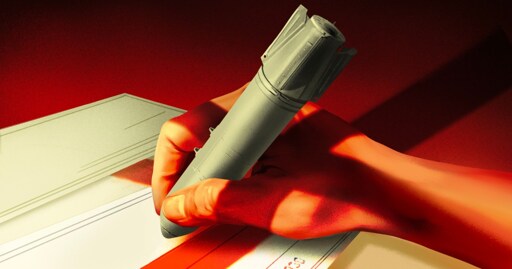
The beauty of it is – the people you go with don’t have to be ‘like-minded.’ You can enjoy Oceans Eleven without endorsing theft, you can enjoy HTBUAP without endorsing sabotage. If your friends feel it crosses a line, that’s a very interesting post-film discussion: Why isn’t it disturbing for people to root against the ‘house’ in Oceans? Is it okay to break the law to get rich, but not to do it for justice?
Even the right-wing reviewers who hate the premise admit it’s a well written film in the vein of heist thrillers.
It’s a really good movie. Not particularly useful if you actually want to destroy something - they were careful to get a consultant to make sure they didn’t break any laws or create liability for themselves or the studio. If you didn’t see it in theatre, you missed out! I’m really glad the feds are wringing their hooves over it, it deserved much better marketing. It is destined to become a cult classic.
I agree and I’m aware it has negative connotations – it is inseparable from modern methods of administering power. Without records, how can you demonstrate you’re distributing resources equitably? I recognize that my role as admin is basically an anarchist bureaucrat – approving applications, responding to reports, writing reports on progress for the community each month; it’s done digitally now, but it’s the stuff that would otherwise be the paperwork for which bureaucracy was made famous.
Bureaucracy was invented in France during the reign of kings, in hopes that it might quell the frequent revolutionary uprisings. It used to be that the only way you could get a license to do anything was through an audience with the king, or access via one of his courtiers – a role similar to modern lobbyists. This exclusivity of access meant the richest and most well connected were granted corporate charters, business licenses, or land titles, creating extremely stark class division between the bourgeoisie and even the petit bourgeoisie.
The role of bureaucracy (named after the drawers where they kept the mountains of paper this activity generated) was to ‘democratize’ distribution of licensing and grants to everyone based on meeting the same requirements and paying the same fees. It was popular enough to get grafted into the organs of the new republic once one of the uprisings hit the mark.
It was ‘democratic’ in the same sense that electoral ‘democracy’ is democratic - that is, it is closer to the ideal of freedom than autocratic rule. But citizens are still vulnerable to the whims of tyrannical bureaucrats. Even at the local level and at small scale, a bureaucrat can do a lot of damage if there isn’t popular power prepared to resist him.
For example in Chennai, the Zero Rupee was invented to build popular power against a culture of compulsive bribery that is endemic to all levels of the state bureaucracy. Bureaucracy is a burden that’s accepted because the alternative is clearly worse, like the French kings of old. But all bureaucracies are not the same, and merely making them smaller or ‘distributed’ does not solve the problems that can arise when they are not open to public challenge.
The primary purpose of distribution centers is to serve capital, and there are plenty of private libraries. In the case of a library or dispensary, a bureaucracy can definitely increase the equanimity of the distribution of wealth in a society, but that relies on both the bureaucrats and the public they are supposed to serve to be willing to fight for that ideal.