cross-posted from: https://news.abolish.capital/post/88188
Treasury Department says the reasons for Venezuela’s inclusion no longer exist.
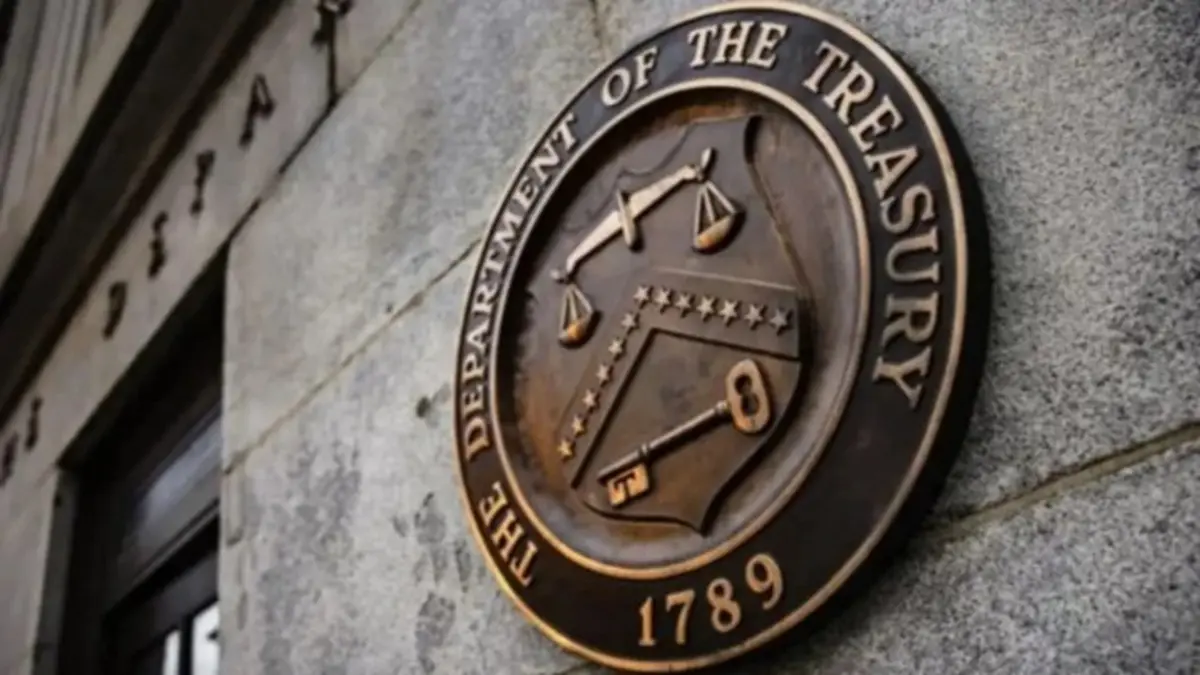
On Thursday, the U.S. Department of the Treasury’s Office of Foreign Assets Control (OFAC) removed Venezuela from the list of countries subject to restrictions on U.S. investment.
RELATED:
Venezuela’s Acting Pres. Delcy Rodríguez Meets 2015 Assembly Delegations
Established under the 2025 Comprehensive Outbound Investment National Security Act (COINS Act), the list still includes countries such as China, Russia, Cuba, Iran and North Korea.
To justify Venezuela’s removal from the list, the Treasury Department said the reasons that led to the country’s inclusion no longer exist and that the current government does not meet the definition established by the COINS Act.
However, the OFAC announcement included a warning: The rule could still apply to certain investments in Venezuelan entities, although no details were provided.
“The COINS law significantly expanded the scope of U.S. controls on capital flowing abroad. The proposal requires notification in six sectors and five designated countries, and imposes a total ban on artificial intelligence. The public can submit comments through Dec. 7; the final rule will follow,” the financial website PitBullChain explained.
“The key distinction that must not be overlooked is that this is a mechanism for scrutinizing outbound investments. It is not a lifting of the OFAC sanctions regime. Removal from the COINS list does not mean that existing restrictions on specific individuals and entities disappear.”
“Venezuela’s removal from the COINS list can be interpreted as a sign of reduced friction: less friction for a U.S.-based exchange, a payment processor or a small fund to consider operating with Venezuelan counterparties without automatically falling into the category of a country under scrutiny,” the financial website added.
The list of countries included under the COINS Act was originally advanced with bipartisan support. Its goal was to expand oversight of capital flows into sectors considered sensitive to U.S. national security.
Regarding the scope of the policy, Treasury Undersecretary Chris Pilkerton explained that the program’s purpose “is to ensure that we have the ability to monitor and potentially prohibit those types of investments” that could pose risks to U.S. national security.
teleSUR/ JF
Sources: PitBullChain – OFAC
From teleSUR English via This RSS Feed.

It is not a lifting of the OFAC sanctions regime
They’re still not lifting the sanctions.
Death to America.

A real communist is in favor of US sanctions on Venezuela to own the comprador abuelitas !
Yeah I think this is partially the US government panicking at failing their war with Iran, so they’re trying to clear the way for investment into Venezuela so they can get the oil production rolling by lifting some sanctions. I don’t think this is gonna work though lmao. Hopefully Venezuela can get something out of this that benefits the country.
I think that’s exactly right, and it reminds me of the US lifting diesel sanctions on Russia too.
It doesn’t actually signal a real shift in policy, it’s just ineffective flailing.
Yes I think the grifters who are promising development may not be able to build the infrastructure in any reasonable amount of time. Anything they do build is firmly in Venezuelan and can later be expropriated if it’s not providing anything for the country and people. Otherwise the promise of them building also is a mechanism for lifting sanctions and allowing Venezuela to continue development in a more effective way due to having more freedom to participate in the global economy and have access to previously sanctioned materials. Like the recent expansion of their electric grid due to new access to previously sanctioned materials

Investments = Burger misnomer for debt trap.
Now they can launder the squander more easily. An egg cracked from the outside is food.
Trump administration quietly closes criminal probe into Venezuela businessman amid oil deal
After years of failing to persuade prosecutors in the US, Spain and Switzerland to move on from their criminal investigations into him, Betancourt’s biggest break came after the US military in January snatched Venezuelan leader Nicolás Maduro from his home in Caracas and brought him to New York to face narco-trafficking charges. Within hours, Betancourt’s phone rang and administration officials sought his help to begin discussions with officials in Maduro’s government who remain in charge, led by his vice president Delcy Rodríguez, according to multiple people familiar with the oil deal.
US set to take control of major portion of Venezuelan’s oil wealth
A lot of blatant disinformation and editorializing here, it is weird and borderline reactionary to be so invested in painting Venezuela as something it is not. Only gusanos put so much effort into disparaging and rumor mongering against Chavismo
Chávez is dead, Maduro was not that Chavist either and the current comprador is a total sellout.
The price was to become a U.S. protectorate, just like Iran before 1979.