

For nearly a decade, The Church of Jesus Christ of Latter-day Saints has been engaged in a top-down rebrand meant partly to solidify its focus and bona fides as a Christian religion.
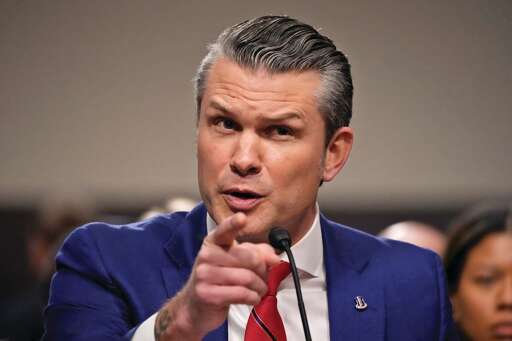
The U.S. Department of Defense, led by conservative evangelical Pete Hegseth, appears unconvinced.
On Friday, spokesperson Sean Parnell confirmed on social media a report that the department had trimmed its list of recognized religious affiliations, used by its chaplains, from more than 200 to 31.
The Latter-day Saint faith was among those to make the cut. But there was a catch.
The list denotes 20 faiths as Christian, including Catholic, Orthodox Christian, Baptist and Jehovah’s Witnesses. Not, however, the Utah-based faith.
Asked by The Salt Lake Tribune if this omission was intentional, a member of the department’s press team pointed to the statement posted by Parnell.
The Office of the Secretary of War is announcing a significant change to the Department’s categorization of religious affiliation. In a long overdue move, we reduced the list from over 200 unmanageable categories to 31. With this move, we are returning to the original intent of… https://t.co/dgHX5ytzjJ pic.twitter.com/eho537O08J — Sean Parnell (@SeanParnellASW) June 5, 2026
“This decrease in religious affiliation codes is not designed to make any claims on the legitimacy of any faith or religious belief, nor is it intended to provide a list of ‘officially approved’ religions,” he wrote. “Rather, it is designed to allow chaplains to quickly look at the religious composition of their units and determine how they structure resources to best provide for warfighters of all faith groups.”
However, an accompanying video by Hegseth seemed to suggest the change wasn’t entirely one of streamlining bureaucracy.
“In previous administrations, our Chaplain Corps was infected by political correctness and secular humanism,” he said. “…Faith and virtue were traded for self-help and self-care. We started correcting that drift [in December], and today we’re going further.”
Asked if the church planned to respond, a spokesperson for the faith pointed to the FAQ portion of its website. It reads: “Latter-day Saints believe God sent his son, Jesus Christ, to save all mankind from death and their individual sins. Jesus Christ is central to the lives of church members.”
Utah Sens. Mike Lee and John Curtis, both members of the church, took to social media Saturday to condemn the seeming snub, with Curtis stating he is “working now to ensure a correction is made.”
Among those eliminated were Unitarian Universalists, various Wiccans, deists, atheists and others, according to Military.com, the first to report the news.
Muslims also believe in Jesus. Does that make them Christian as well?
No, Christ isn’t the center of it. Christ to Muslims is like Abraham to Christians in a way. It’s not a perfect analogy but gets the gist across.
I’d define a Christian as someone that thinks Jesus of Nazareth’s time on earth and his teachings were the most supernaturally important of anyone ever.
Muslim’s believe Muhammad’s teachings were more important. I think Bahai’s revere Jesus similarly to muslims. I don’t really know what Mormons believe, but I think they’d meet my threshold for Christendom. The fact that they also want to be called Christian is a major tick in their favour.
Only because they believe that the revelation to Muhammad was faithfully recorded at the time, while the Christian record of Jesus’s teachings was corrupted by being an oral tradition that changed and was corrupted. Islam believes that there were 99 prophets, Muhammad being the last. And they all taught the same thing. Abraham was a Muslim, so was Jesus. And all the prophets were mortal men, not semi-divine figures.